
Ready Mixed Concrete
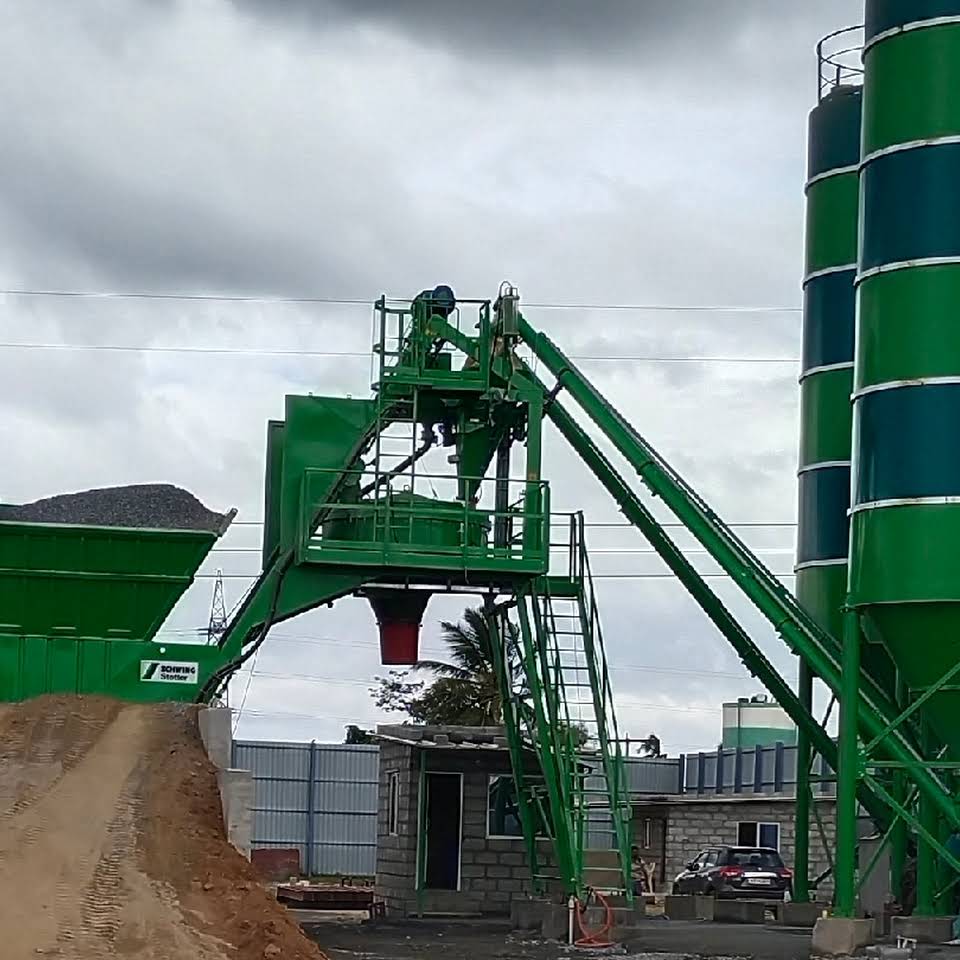
At SNC Ready Mix and Solid Blocks, Ready mixed concrete is produced in its fully automated and computerized concrete batching plant. SNC Ready Mix and Solid Blocks manufactures and supplies concrete mixes, which are designed in its well-equipped laboratories as per established procedures to comply with various provisions of Indian Standards. The Various Grade of “Ready mix concrete – RMC“ Are M7.5, M15, M20, M25, M30, M35, M40, M45, M50, M60. We have managed and handled High end machinery with well qualified professional Team, very efficiently. The materials consumption to optimum level, resulted in production of large volumes of “ Ready mix concrete- RMC “ with consistent quality. Our Association & intention is to have long term relationship with customers and vendors, We Value the opportunity given to us by in serving the fullest capacity. SNC Ready Mix and Solid Blocks experienced logistics team works closely with you to ensure that the concrete of requisite quality is delivered on time and in the appropriate quantities.
Advantages of Ready Mixed Concrete over Site Mixed Concrete
Quality
RMC produced from fully automated batching plants guarantees quality since:
The raw materials are subject to stringent quality and quantity measures.
The concrete is subject to quality control throughout the manufacturing and delivery process.
Diversity of solutions
A wide variety of ready-mixed concrete can be produced, with ease and on demand, by varying the proportions/combinations of the cement, aggregates, and admixtures.
Service
Ready-mixed concrete provides customers with unique service quality due to the:
The availability of a large number of concrete mixer trucks enables delivery rates to be kept under control.
supply of special services for difficult worksites like pumps, conveyors, etc.
the ability to adapt the pace of deliveries to the customer’s needs.
Cost-effectiveness
Ready-mixed concrete is more cost-effective because:
Basic materials are now not stored on site and this reduces the need for storage space.
Plant and machinery for mixing concrete are not required.
Wastage of basic materials is avoided.
Labour associated with the production of concrete is reduced.
The time required for the entire process is greatly reduced.
Lower Pollution
The use of RMC reduces air pollution in and around the worksite as the mixing is done at the plant.
Ordering ready mixed concrete
Do consult a qualified structural designer to determine the grade of concrete required for your structure. Ensure that the SNC Ready Mix and Solid Blocks technical team is informed about the correct grade of concrete along with other relevant details (specific contractual requirements or suggestions from the structural designer).
Formwork (Shuttering and Centering)
A properly constructed formwork is the cornerstone of a reliable concrete structure. Do have the formwork inspected and approved by a qualified structural designer before pouring the concrete.
Placing of Concrete
Improper placing of concrete could result in a defective structure that may require expensive repairs. While placing concrete, do ensure that:
The concrete is deposited in or very near to its final position. The concrete is not placed in large heaps on the formwork. Moving heaped concrete manually or with a vibrator should also be avoided. The concrete is poured vertically from a height of less than one meter; otherwise, it may lead to segregation. In mass concrete works, the concrete is placed in uniform layers; sloped layers may lead to segregation.
When thickness/depth of structure is more than 300 mm (1 foot), concrete is placed in two or more layers of equal thickness/depth. In general, the allowable thickness of each concrete layer ranges from 150 mm (6 inches) to 300 mm (1 foot). In layered construction, fresh layer of concrete is placed only after the lower layer is properly compacted, but before that layer has set. If the continuity in placement is not maintained, it will lead to the formation of cold joints that will weaken the structure. For slabs, concrete placement starts from the corners and ends, and then continues inwards.
There is no displacement of reinforcement and/or damage to formworks. For large concrete pours, proper planning and co-ordination are crucial in avoiding delays, cold joints, or segregation. When concrete is being poured into deep sections with heavy/congested reinforcement, ensure sufficient visibility so as to ensure proper placement of concrete. Inadequate care in placing may lead to segregation, poor finish and honeycombing effect, particularly in the lower portions of the structure.
Compaction of Concrete
Concrete, unless it is specifically designed for self-compaction, must be compacted. Compacting concrete removes the entrapped air and voids, and consequently increases the strength and durability of the concrete. To achieve uniformly compacted dense concrete:
In the general construction of slabs, beams and columns, use needle vibrators of 50 mm diameter. For thin sections, in confined locations, and in structures with congested reinforcement, use a 30 mm diameter needle vibrator.
Ensure an adequate supply of spare vibrators and adequate fuel at the site. The concrete surface being compacted must be visible. The needle should be inserted quickly and allowed to quickly and completely penetrate the concrete on its own weight. The needle should not be left in the concrete for more than 10 seconds. If the concrete is being pumped, it will have a slump of 80-120 mm; in this case, the needle should not be left in the concrete for more than 5 seconds. Over vibration may cause mortar to accumulate on the top with the resultant thin layer having poor strength.
Use experienced operators to man vibrators; they can determine when adequate compaction is achieved. Typical signs of sufficient compaction are air bubbles on the surface and the constant drone of the needle vibrator. Withdraw the needle from concrete slowly to ensure that the hole left by the needle is filled. Insert needles in staggered fashion to ensure uniform compaction for the concrete. In a layered placement, the needle should penetrate the bottom layer by 80-100 mm.
For compaction in hot weather (for concreting of slabs), use a light initial vibration and then another round of vibration after about 30 minutes; this helps in significantly reducing shrinkage cracks. If concrete segregates due to over vibration, fine aggregates tend to accumulate on concrete surface and there is a tendency to shrink and crack. To avoid this, plough up and mix coarse aggregates with the help of forks (punja) before finishing.
Wherever construction joint is to be provided, stop-ends should be firmly fixed to avoid movement of joints and ensure proper compaction of the concrete near stop-ends.
Curing of Concrete
Curing of concrete, which helps retain water in concrete that may have evaporated due to prevailing high ambient temperatures and/or windy conditions, is the last but significant step in concrete construction. Inadequate curing can result in concrete of poor strength and durability.
Curing is generally done by sprinkling or spraying of water, by ponding or immersion, and by covering exposed surfaces with wet jute or hessian cloth. For slabs, ponding is the best method of curing. For effective curing of concrete, do ensure that:
Continuous and adequate supply of water is available at the site throughout the curing period. The exposed concrete surfaces are kept in the wet or damp condition for at least 10 days from the date of placing concrete. Curing for 14 days would be ideal.
In hot weather, curing by sprinkling of water is started within 4 to 5 hours of batching of concrete and continued till bunds are prepared and ponding is done.In some cases, when the temperature is above 30 °C and strong winds are blowing, concrete surfaces may dry very fast inducing plastic shrinkage cracks as early as within 30 minutes of concrete placing. In such a situation, trowel the cracked concrete surface while it is still plastic to erase the cracks and then ensure that the concrete surface is continuously kept wet.
Curing water and material used for bunds are free of substances which may stain or discolor concrete. Preferably cement mortar is used to prepare of bunds instead of earth. Bunds for ponding of water are maintained throughout the curing period.
The height of bunds is sufficient for the ponding water to cover entire area uniformly including corners and edges. To avoid dry spots, water should be ponded for at least 20 mm above the highest point of concrete surface. For sloped roofs, staircases, columns and other vertical surfaces, cover the entire surface with hessian or jute cloth which is saturated with water throughout the curing period.
Advantages of Ready Mixed Concrete over Site Mixed Concrete
Quality
RMC produced from fully automated batching plants guarantees quality since:
The raw materials are subject to stringent quality and quantity measures.
The concrete is subject to quality control throughout the manufacturing and delivery process.
Diversity of solutions
A wide variety of ready-mixed concrete can be produced, with ease and on demand, by varying the proportions/combinations of the cement, aggregates, and admixtures.
Service
Ready-mixed concrete provides customers with unique service quality due to the:
The availability of a large number of concrete mixer trucks enables delivery rates to be kept under control.
supply of special services for difficult worksites like pumps, conveyors, etc.
the ability to adapt the pace of deliveries to the customer’s needs.
Cost-effectiveness
Ready-mixed concrete is more cost-effective because:
Basic materials are now not stored on site and this reduces the need for storage space.
Plant and machinery for mixing concrete are not required.
Wastage of basic materials is avoided.
Labour associated with the production of concrete is reduced.
The time required for the entire process is greatly reduced.
Lower Pollution
The use of RMC reduces air pollution in and around the worksite as the mixing is done at the plant.
Transport and Pumping
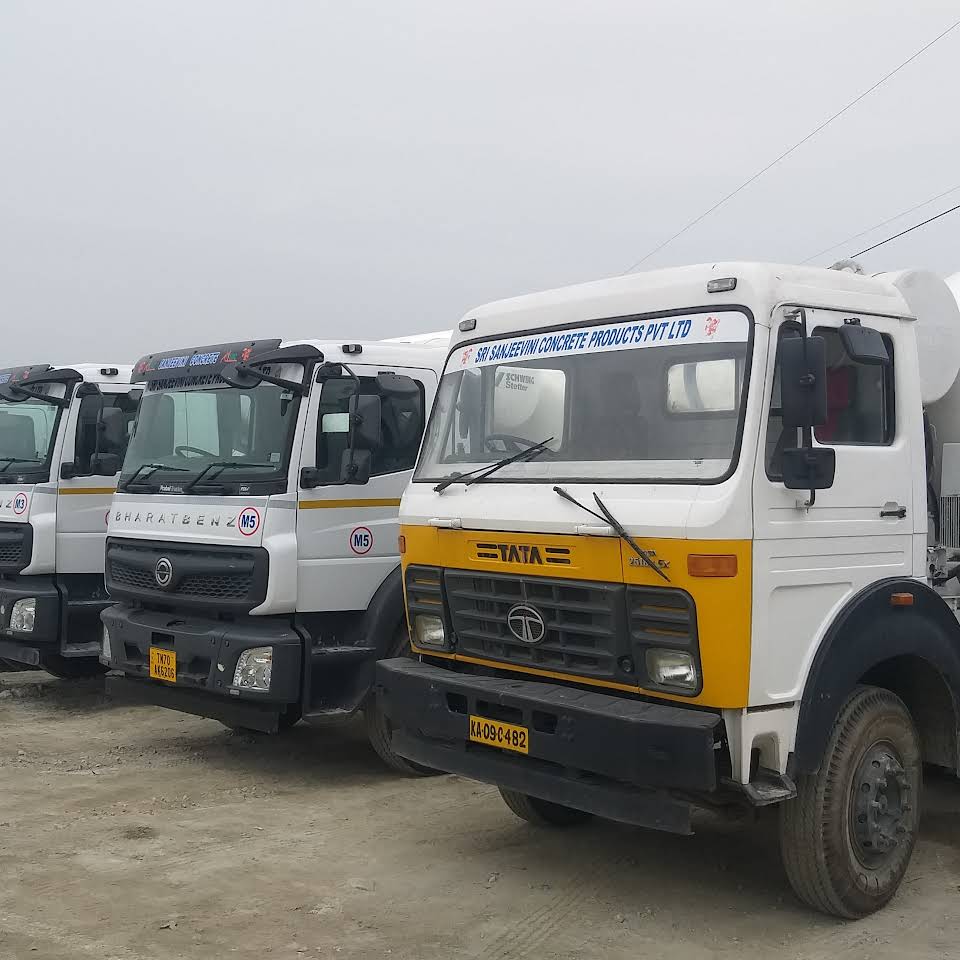
Transport
To ensure speedy and efficient delivery, SNC Ready Mix and Solid Blocks team will survey the site to ensure that the transit mixer trucks will have unimpaired access to the site. Among the factors they will consider are:
The access road and ground condition up to the discharge point should be safe and good enough for heavy vehicles.
Sufficient turning space should be provided for the transit mixer to access and leave the delivery point.
The distances, heights, and clearances should be sufficient for moving the equipment.
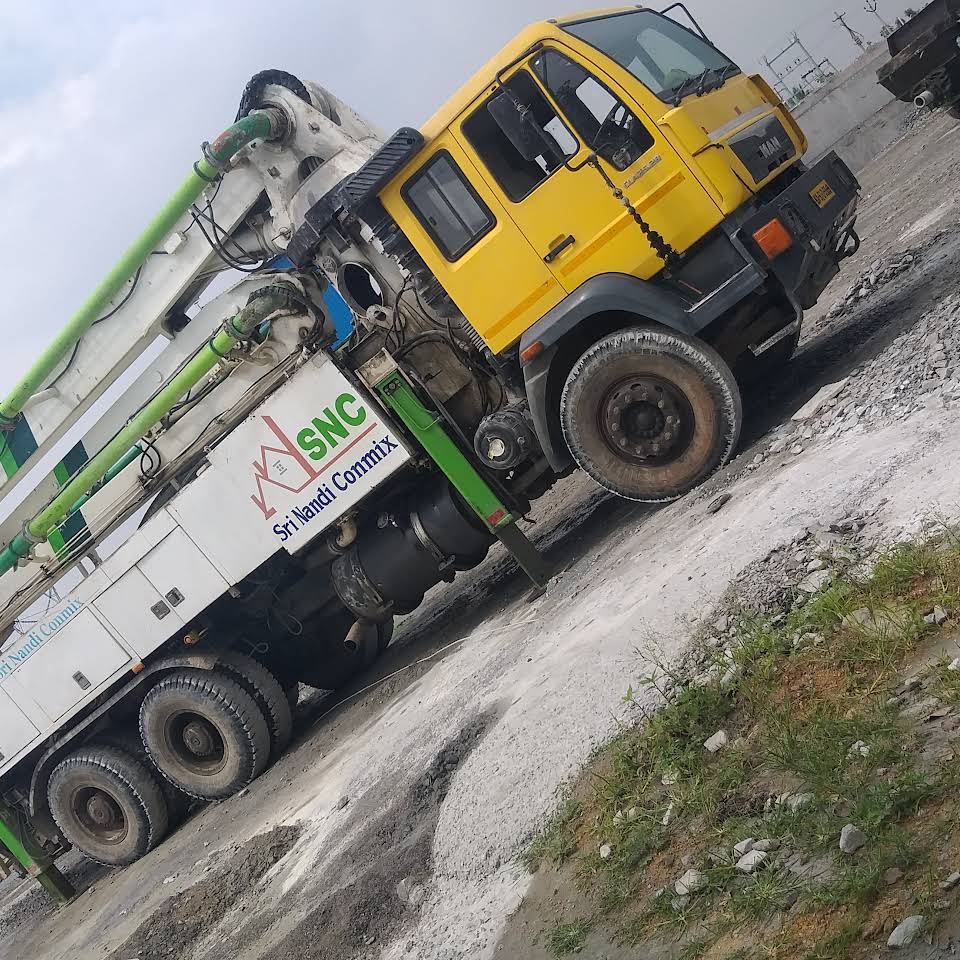
Pumping Concrete
Solid Blocks
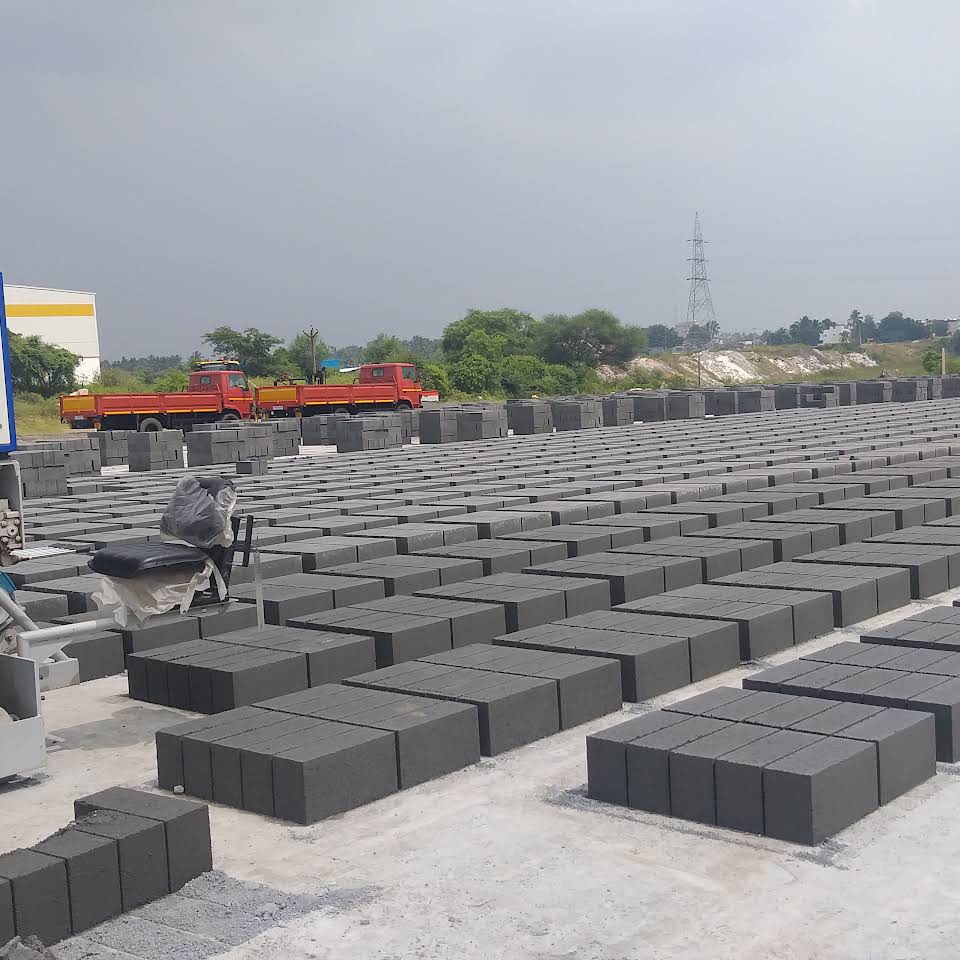
Blocks are indispensable for modern building and construction industry. These blocks are manufacturing from mixture of cement, sand and stone chips. During the process the raw material is mixed from cement, fine aggregates and a natural expansion agent.
They are most durable and a good insulator. These bricks have high compressive strength and available in different sizes which are used in construction industry. These blocks find wide applicability and construction cost is largely reduced.
Our Block Features
1. Sharp Edges
2. Even Faces
3. Even Sizes
4. Not Easily Breakable
5. High Compression Strength
6. The mix of Concrete is mixed in batching by weighing the aggregates. The materials will be evenly spread to achieve good strength on all blocks.
7. There will not be any void. The materials will be tightly packed.
| INDIAN STANDARD SIZE | |
| Parameter | Description |
| Typical size |
• 400 x 200 x 200 mm • 400 x 200 x 150 mm • 400 x 200 x 100 mm |
| Average compressive strength at 28 days | 5 Newton to 9 Newton |